

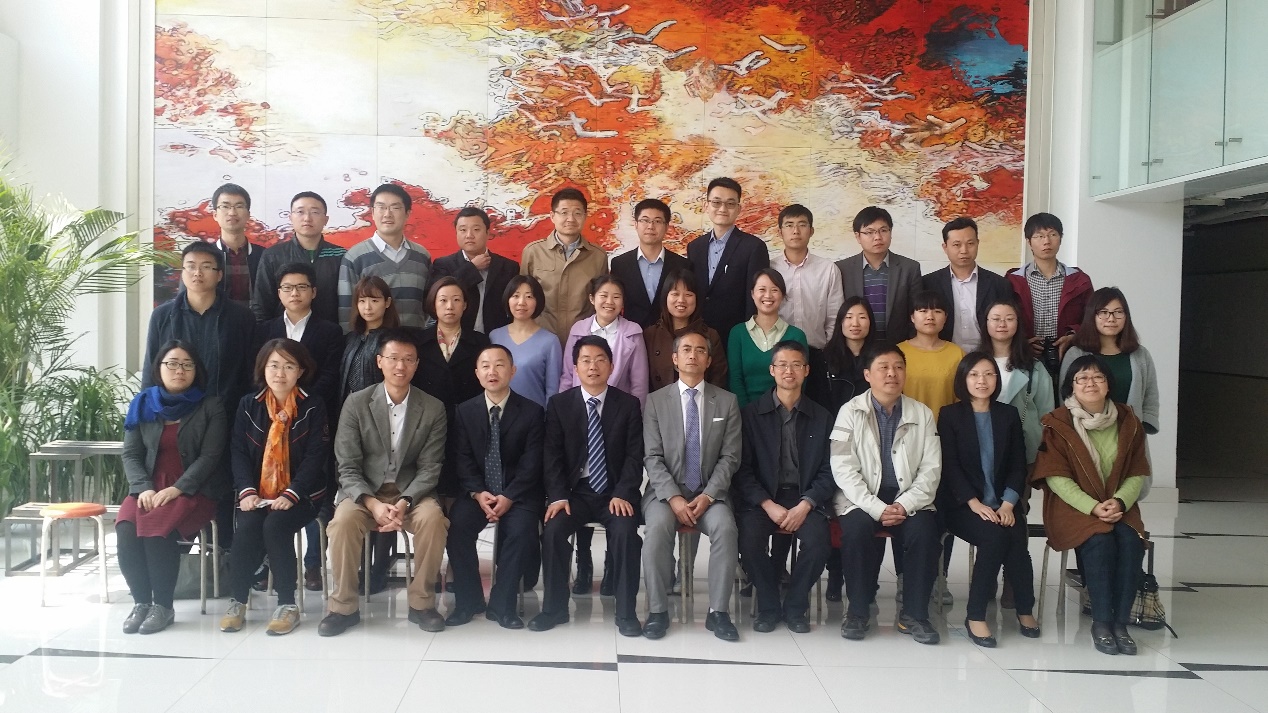
The 2015 SUFE Real Estate Spring Forum----Real Estate Information Development and Application under Big Data Era, jointly held by SUFE Real Estate Institute, SUFE Public Policy and Administration Institute, Shanghai Finance University Pudong Institute, and Shanghai developing Strategy Institute Wang Hongwei Workroom(Real Estate Market Research and Development), was solemnly held in SPEA in April 17, 2015.
President of Shanghai Finance University and honorary president of SUFE Real Estate Institute Professor Wang Hongwei, Deputy President of SUFE and President of Real Estate Institute Professor Yao Lingzhen, Director of SPEA Professor Yu Wei attended the forum and made speeches respectively.
SUFE Deputy President Professor Yao Lingzhen pointed out in her speech that, Real Estate is the foundation of city development and a major part in national economy. This workshop, gathering authoritative experts from home and abroad, exchanging update research achievements and sharing practice experience from the perspective of how to effectively develop and utilize real estate data under Big Data Era, would play an active role to speed up achievements transformation, promote real estate industry restructuring, and improve the decision-making support from scientific research.
This forum was initiated, organized and hosted by SUFE Real Estate Institute Executive President Professor Chen Jie. Well-known scholars from Tsinghua University, Renmin University of China, Fudan University, Central University of Finance and Economics, Southwest University of Finance and Economics, Heriot-Watt University and other famous universities, together with experts from government and industry circles, attended the forum and made keynote speeches respectively. SPEA deputy director Professor Fang Fang and some teachers and PHD students listened to the lectures. This forum attracted more than 70 attendees including university scholars and industry professionals, making it an unprecedented presence.
In the academic lectures, Professor Fu Shihe from Southwest University of Finance and Economics introduced the well-known Database China Household Finance Survey, and based on this database, made a report on the relationship between housing wealth effect and labor market participation. His research leads to the conclusion that, the increase of housing wealth would reduce female employment rate while has little effect on male employment rate.
Then, Professor Qu Weidong from Renmin University of China Public Administration School elaborated Big Data Theory and Mass Appraisal System. Professor Qu pointed out that we should set out data integration technology criterion based on real estate unified registration, since there are problems in current real estate data as low reality, little diversity, and non-unified standard.
Professor Yi Chengdong from department of Urban Real Estate, School of Management Science and Engineering, Central University of Finance and Economics, analyzed real estate industry and Beijing urban economy based on 2000-2012 input-output table. He believed that, the driving effect of real estate industry is high in Beijing since it has a higher rate of third industry while the whole nation’s situation is just the opposite. The driving effect on economy, whether in Beijing or nationwide, showed a downward trend. Therefore, we should not overestimate its driving effect.
Associate Professor Wu Wenjie from School of Architecture and Environment, UK Heriot-Watt University, analyzed the evolution of our urban space network and economic pattern based on Weico Big Data. His research shows that inflow and outflow of urban population is closely related to local population density and economic vitality, and first-tier cities are connected to the whole nation while second and third class cities are mainly connected with provincial capital. In addition, he found that the population mobility is low when the city dialects have great difference.
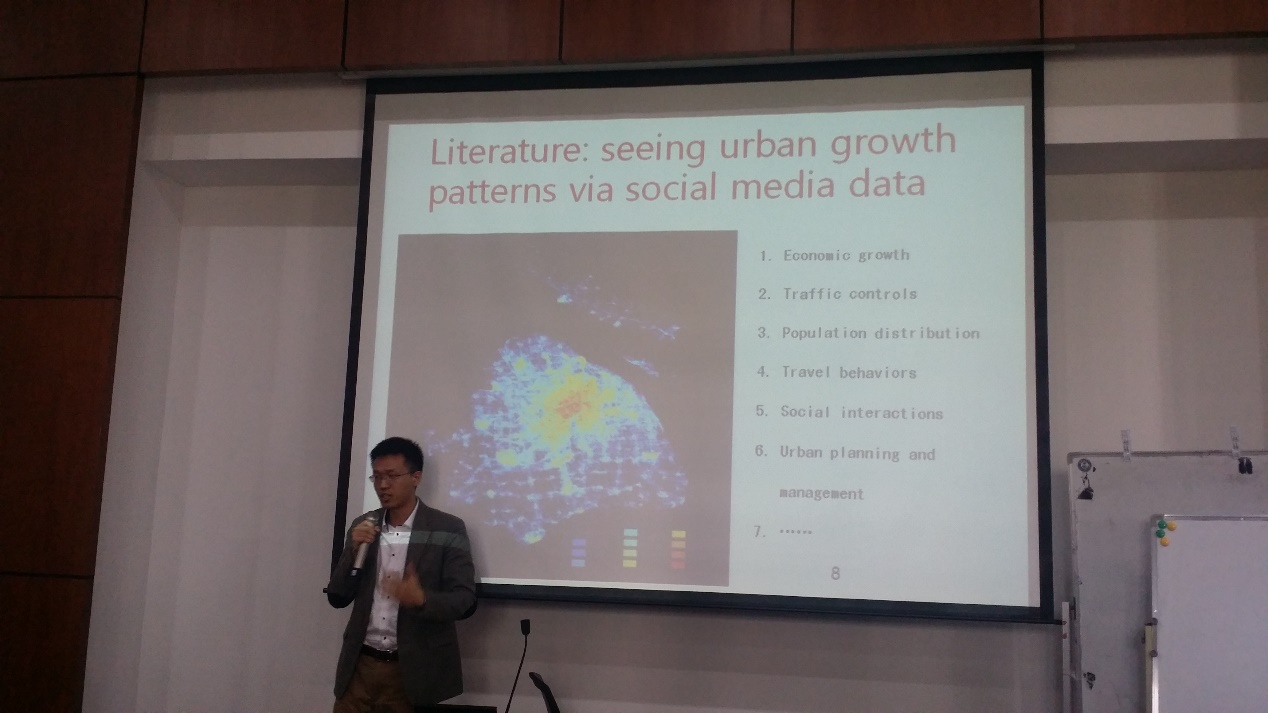
Associated Professor Zhang Yina from Social Science Data Center of Fudan University analyzed the effect that urban rail transportation construction laid on Shanghai new city development. New city development needs support from rail transportation, since it has a powerful leading effect on city spatial arrangement and a direct influence on general population distribution. However, the effect of rail transportation on development of rural new city is still not sufficient due to the low level of transportation.
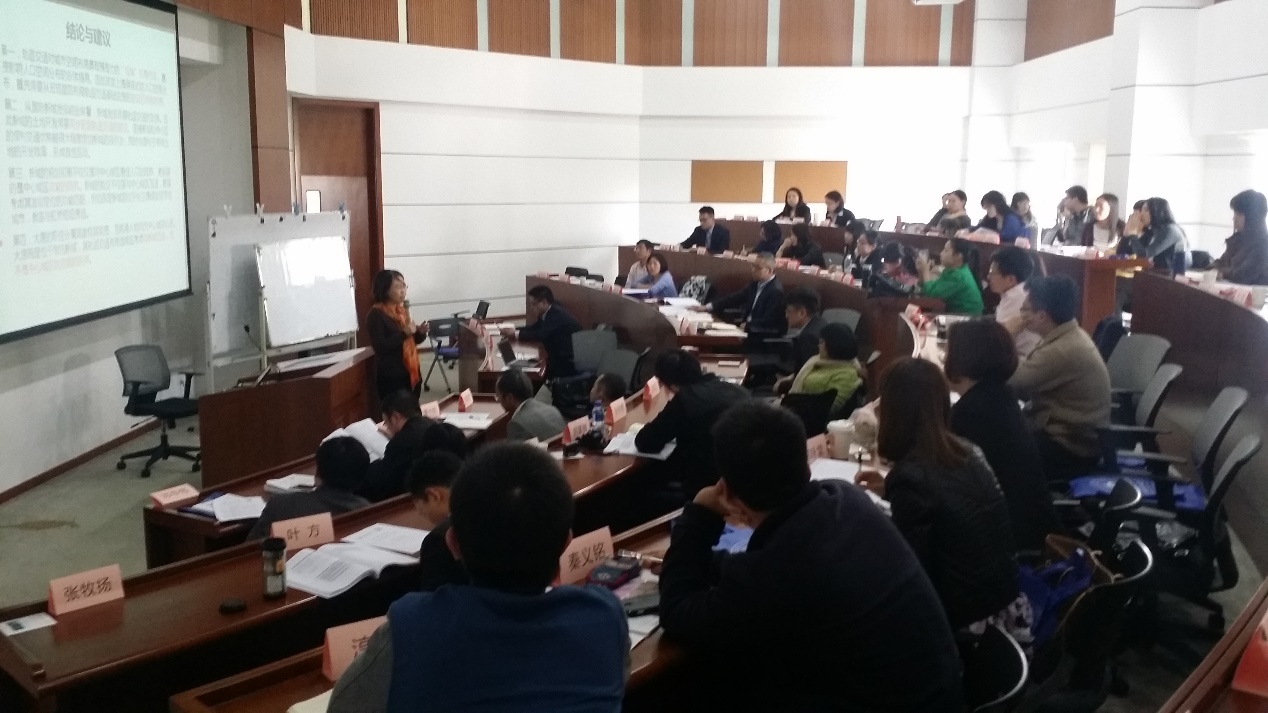
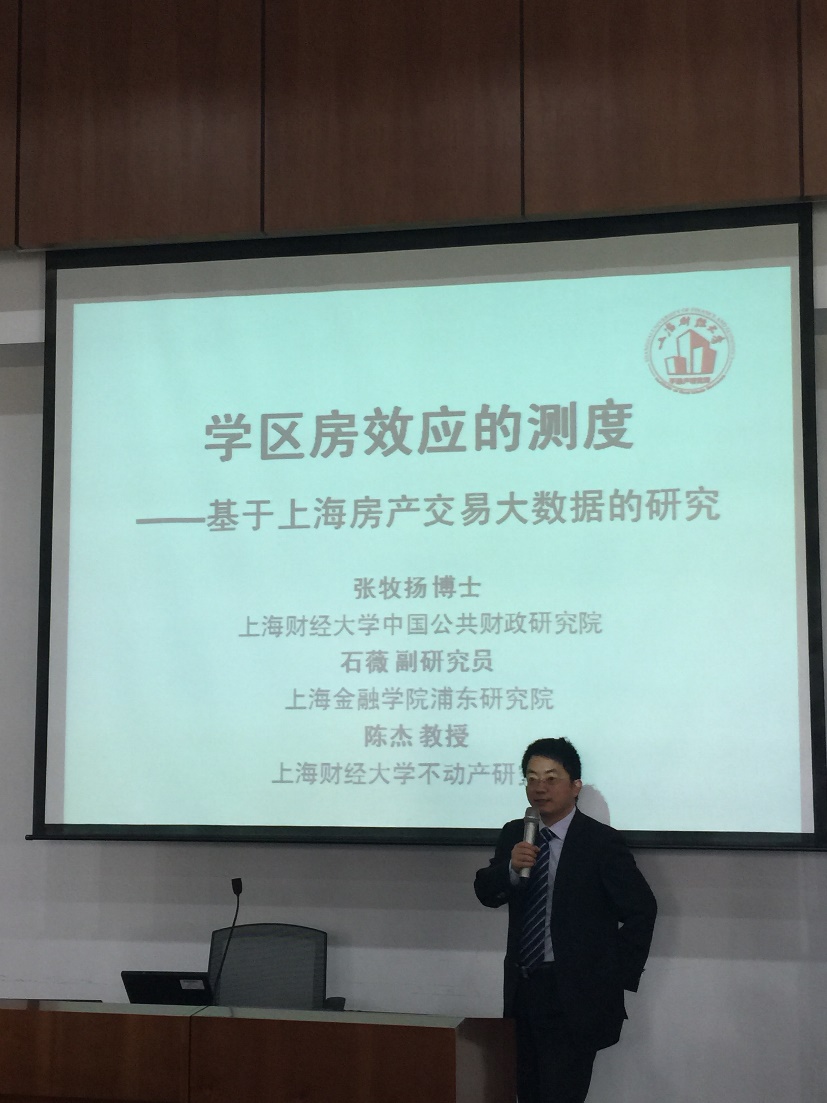
Four professional reports followed the five academic lectures. Director of China Real Estate Data Academy Chen Sheng made a report of making use of big data to analyze China Real Estate Finance Security. Research Director of Lezhi Consulting Doctor Deng Zhongwei demonstrated how to use muti-source data to construct real estate database. Deputy GM of Career Information Group Research Center Lin Bo interpreted how to use on-sale area to analyze real estate market risk in multiple dimensions. Project Manager of Shanghai Urban Real Estate Appraisal Xiao Liyi reported the exploring work of standardization of real estate database construction.
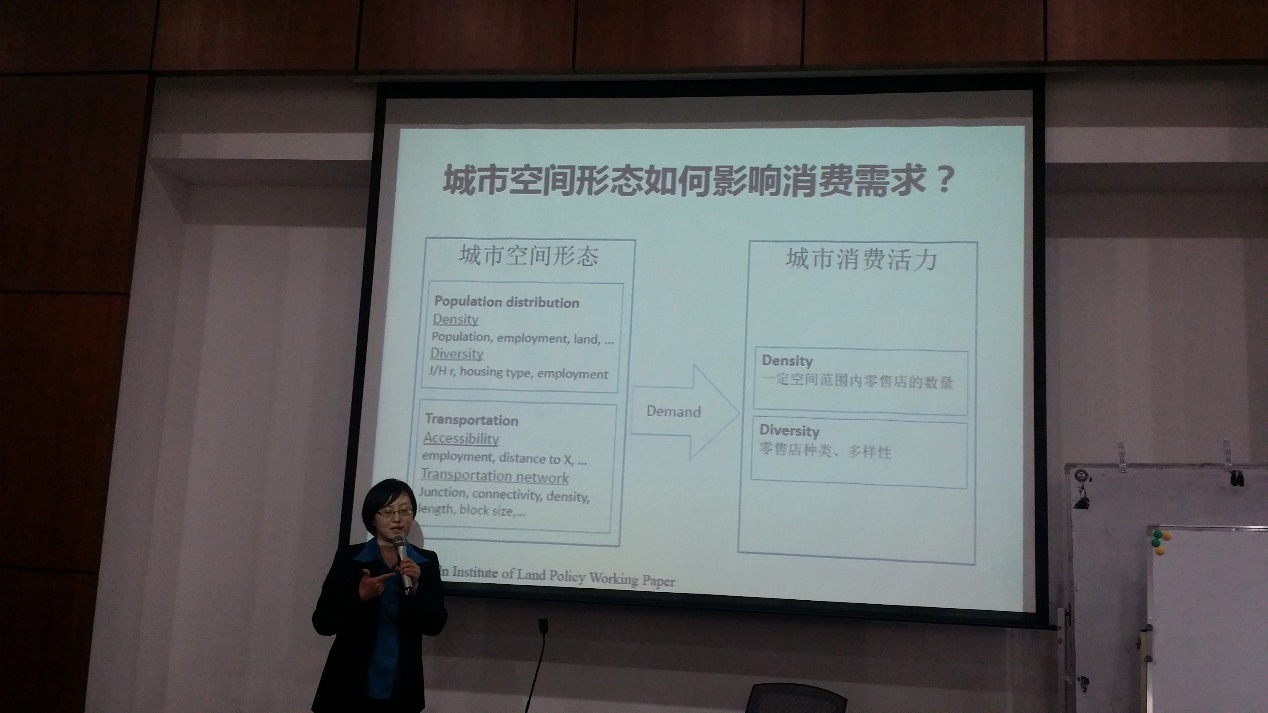
In the last section of keynote speech, Dean of Henglong Real Estate Center, Tsinghua University, Professor Zheng Siqi introduced how to use big data from dianping.com to analyze urban commercial vitality. His research shows that consumption vitality is positively correlated with crossroads and more paths bring higher energy while more highways bring lower energy. During urban development, government investment would drive private investment, forming multiple effect. In addition, new railway station would lead to gathering and diversity of restaurants, which would make positive contribution on housing price and rent. That is to say, newly-build railways as well as surrounding commercial atmosphere would lead to the increase of housing price and rent.