


On the afternoon of March 30, 2017, Shanghai University of Finance and Economics Department of Investment 2017 Annual Series of Industry Reports No.1 was successfully held in Conference Room 102, Entrepreneurship Center, Wuchuan Road Campus, SUFE. In the report, the speakers were all from the HomeLink Research Institute, including the president of the Institute, Dr. Yang Xianling, who made a speech called "Stock era, circulation winning: new normal in the real estate market" , and the president of Shanghai HomeLink Research Institute, Chen Zeshuai, who also made a speech about "data drives the HomeLink growth" .
The Industry Report was planned and presided by SPEA Investment Dept. Dean Professor Chen Jie, while Fellow of the British Academy of Social Sciences, University College of London (UCL) Professor Wu Fulong and SPEA Department of Finance Professor Fan Ziying, Department of Public Administration Associate Professor Li Huiping, Department of Investment Dr. Zong Qingqing, Dr. Deng Xiaoying, some PHD students and dozens of people from inside and outside SUFE attended the Report.
Dr. Yang Xianling started from the data analysis of China’s real estate market, combed and summarized the three characteristics of the development of China real estate in 2016. First, the size of the housing stock transaction has gone beyond the size of new house transactions in the first-tier cities and second-tier cities in 2016, the Chinese real estate market has entered the "housing stock era" from the "new house era"; second, in 2016 China's real estate market was still expanding; Third, China's real estate policy has changed in 2016.
After reviewing the basic profile of the development of the national real estate market in 2016, Dr. Yang used the basic analytic framework of supply and demand to analyze the reasons of the expansion of the national real estate transaction from the perspective of leverage and developers. In his view, from the point of view of the lever, house owners was adjusting and improving their own assets and liabilities through buying and selling real estate. From the point of view of developers, financing costs of large real estate enterprise was less than small businesses, so the concentration of China's real estate enterprises became higher.
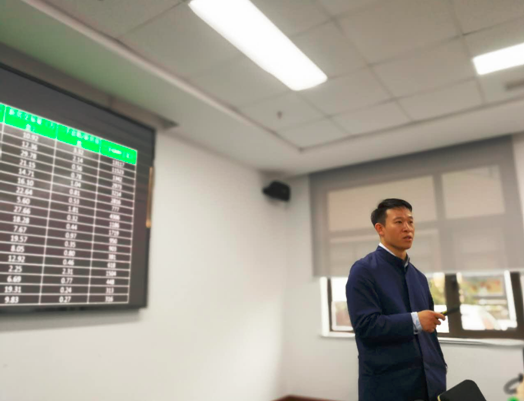
In view of the current concerns about the rapid rise in house prices, Dr. Yang, according to his own research, pointed out that, the important reason for rising house prices associated with the elasticity differences between real estate supply and demand. China's reality was that demand for real estate was strong, but the urban land supply capacity was increasingly limited, which led to the supply elasticity of real estate was weak, therefore, the lack of urban land supply elasticity caused that land supply structure and demand structure did not match, which was an important realistic background for continuous rising of present housing prices.
From the micro-data research, Dr. Yang Xianling also introduced his research findings to the audience: (1) with housing prices rising rapidly in the first-tier and second-tier cities, the entry threshold to buy urban houses was getting higher and higher, and the total price of online showings demand was also getting higher and higher. In this way, the increase in stock trading and the rise of real estate price threshold have become two new trends in the development of China's real estate market in the future. (2) Changing houses demand led to more and more housing stock entering the real estate market. After the long-term rapid development of China's economy, the demand for housing replacement in urban residents has increased significantly, and existence of this replacement effect has led to more and more housing stock entry into the market.
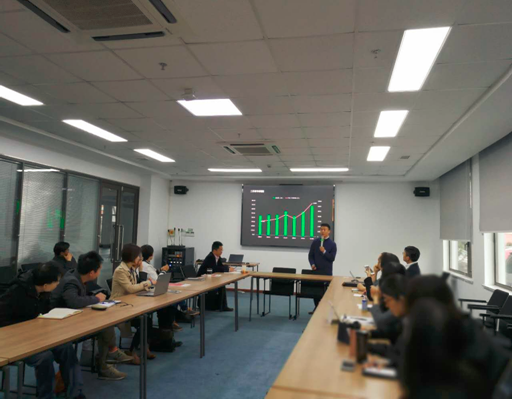
Based on the grasp of the current situation of China's real estate, Dr. Yang proposed several micro-problems that the academic community can study on real estate in the future: housing broker's housing spillover effect, that is, if housing intermediary would promote the rise in house prices; real estate transaction cycle problem; according to a series of behavioral variables of consumers from the housing listing price to the transaction price to examine housing prices problems.
Since then, Chen Zeshuai, president of Shanghai HomeLink Research Institute, also made a speech on "data drives HomeLink growth", showing how to use the advanced data mining technology and machine learning methods to assess employee's ability quantitatively, to improve the staff's evaluation and selection mechanism. During the speech process, the two speakers responded to the questions raised by the audience at any time, and had a heated communication and discussion.
At the end of the report, the host Professor Chen Jie summarized the industry academic report, thanked for the excellent speeches of the two speakers and expressed willingness to cooperate with industry leading enterprises such as HomeLink to strengthen academic research and personnel training, and also welcomed more industry experts embarked on the stage of SUFE Investment Dept., to increase the communication and discussion, and promote industrial development jointly. The Report ended successfully.
Main speaker synopsis: Yang Xianling, Doctor of Economics of Huazhong University of Science and Technology, the current Present of HomeLink Research Institute, has engaged in macroeconomics, real estate and Internet new industry research successively. He has published more than 10 papers in the journal "International Economic Review", "Finance and Trade Economy" and "Financial Research", and participated in nearly 10 national key projects. He published "financial perspective of the great urbanization transformation", "the great transformation of real estate Internet + path", "the rise of new intermediaries and real estate value chain reconstruction" and many other works, won the fifth and sixth Chinese Outstanding Publications Books Nomination Award, and won the 2015 China Youth Financial Scholars Award.
Written by: Zhong Shihu; validation: Chen Jie