


On June 7 to 8, 2017, the 2017 MIT China Real Estate Open Course Shanghai Station, jointly hosted by MIT Li Deyi Real Estate Entrepreneurship Lab and MIT Real Estate Study Center, jointly organized by SPEA Investment Department and Real Estate Institute, was successfully held in room 304 in phoenix building of SPEA. The Shanghai Station is the second station of MIT China Real Estate Open Course, and the first was successfully held in Tsinghua University Construction and Management Department during June 2 and June 4.
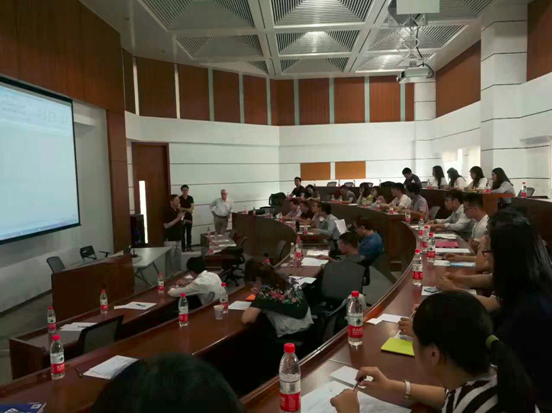
According to statistics, the course for teachers and students in June 7 attracted more than 50 audiences including professors, associate professors, and lecturers from more than 20 universities including Fudan University, Shanghai University of Finance and Economics, Tongji University, East China Normal University, East China University of Political Science and Law, Shanghai University, University of Shanghai for Science and Technology, Huazhong University of Science and Technology, Guangxi University, Zhejiang University of Technology, Xi’an University of Architecture and Technology, Suzhou University of Science and Technology, and Anhui Normal University, while the course for industry department in June 8 attracted more than 70 registered professionals including presidents, general managers, directors, and senior analysts and researchers from more than 60 corporate and organizations including TISHMAN SPEYER, DTZ, JLL, CallisonRTKL, CoStar Group, AAEB5, Singapore Tuan Sing Group, Mapletree Group, CapitalLand, PWC, Baowu Group, Pacific Construction, Swire Properties, Greentown Properties, Longfor Properties, Zhongliang Real Estate Group, Times Properties, China State Construction Land, China Minsheng Investment Group, Zhongnan Construction, Shanghai Rural Commercial Bank, Shanghai Lianjia, China Index Academy, E-House China, Tospur, CAAD, Shanghai Real Estate Science Research Institute, China Real Estate Data Academy, Zhejiang Foreign Service Corp., E-Shang Redwood, Singapore Industrial Investment Consulting, Shanghai Urban House Appraise, New Entrepreneurship Investment, HASSELL, ECADI, Shanghai Tianhua Architecture and Design and Shanghai Planning and Land management Bureaus.
The two days’ open course was entirely held in room 304 in phoenix building. The big room with 60 seats were full of audiences and applause. The students spoke highly of the advanced course content and pleasant teaching style, while the MIT professors also expressed their gaining from students on China’s real estate market, urban economy and macro economy. The whole activity achieved the target of Sino-American educational communication and knowledge exchange, and it is a big success. Holding the Open Course of top university, in the moment of SUFE’s centenary anniversary, has profound meaning in promoting the academic exchange between SUFE and Top US universities, and improving SUFE’s reputation.
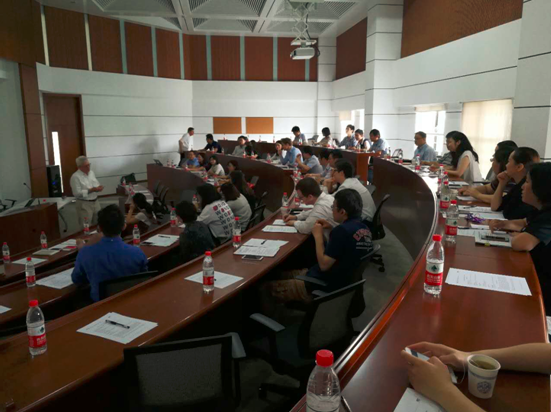
In the beginning of the course, SPEA Investment Department Director and Real Estate Institute Executive Dean Professor Chen Jie, on behalf of Investment Department and Real Estate Institute, extended his warm welcome to the students, expressed his wish to build an long term international high level knowledge exchange platform with mutually accommodating of industry, academics, and research, and welcomed support and participation from all sectors of society. The supporting team, including investment department graduates Chen Zhuo, Wang Wei, Zou Jing, Li Qianqian, Wang Zhengjun, made big contribution to secure the success of the course.
During the course, SPEA party secretary Fang Fang, Professor Chen Jie, Investment Department teacher Dr. Zong Qingqing, post-doctor Hu Haisheng, Shanghai Academy of Development & Reform post-doctor Zhou Qian and several PhD students had active communication with MIT Professors. Secretary Fang Fang and Professor Chen Jie promoted the possibility on academic and teaching cooperation in real estate and urban area between SUFE and MIT, while MIT professors also expressed their wish to support SUFE on its discipline construction on real estate and internationalization, and congratulation on SUFE’s centenary anniversary.
The end of this course is one temporary farewell, and both parties agree on more academic and teaching exchanges and cooperation with various forms and rich contents.
Course Description:
This MIT Real Estate International Course Series aim at promoting the research development and achievement sharing on real estate subject worldwide, and Sino-American real estate area knowledge exchange and interaction. The course speakers are MIT real estate professor Richardde Neufville, professor David Geltner, and Dr. Zhang Xin.
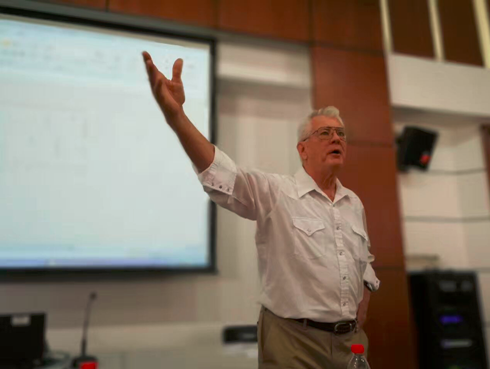
Professor Richardde Neufville
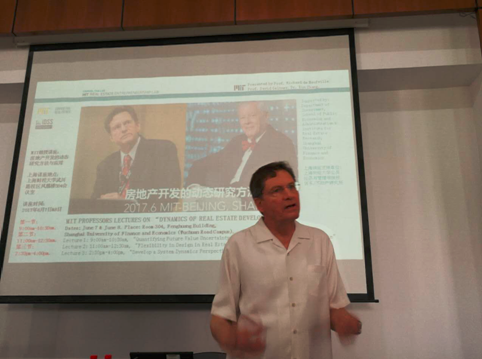
Professor David Geltner
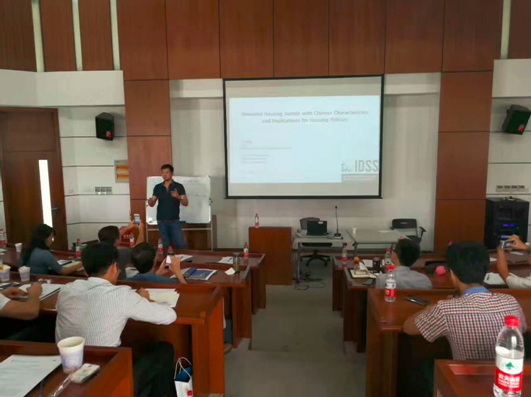
Dr. Zhang Xin
This course is an extension on real estate development dynamic exploration, introducing engineering system and management tool like system dynamic simulation, and bringing new prospective to real estate development and research area. The course focused on China. Aiming at the sophisticated and unique government intervention during China’s real estate development, the system simulates an analysis tool, establishing a model to analyze the relationship between urban house supply and use, exploring possible reasons for non-sustainable development, and promoting solutions for sustainable development through identify factors for inspiring vicious cycle.
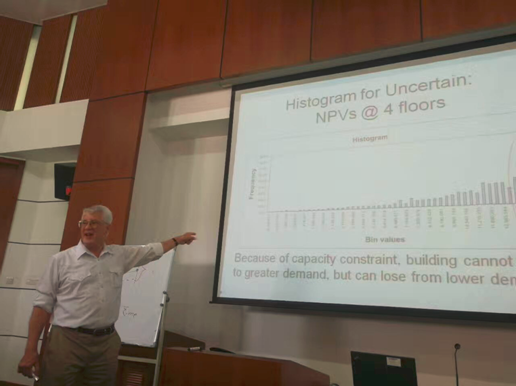
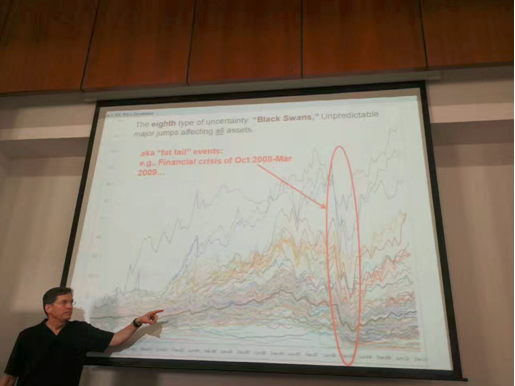
This course is public welfare activity, and is open to society and totally free. The organizers not only provided free lunch and tea break, but also shared all the courseware and study materials, and even issued certificates to each students. Students took group photo with MIT professors.
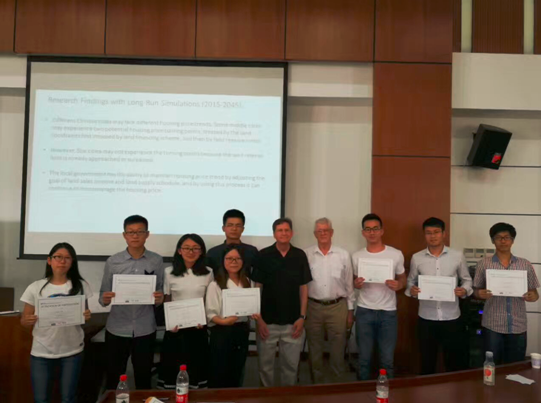
This course, promoted the profession exchange and mutual improvement among MIT, SUFE and domestic real estate professionals, accelerated the health and sustainable development of China’s real estate market and the transformation and upgrading of China’s real estate industry, and enhanced the mutual understanding and friendship, establishing solid foundation for further cooperation.
Article: Chen Zhuo, Review: Chen Jie